
Winter Guard and Mental Health: Building a Culture of Care in the Arts
A deep conversation on mental health in the marching arts: winter guard, color guard, drum corps, and the broader sport of the arts. We won't be side-stepping themes of representation, trauma, community care, and the future of mental wellness within adult & youth performing arts.
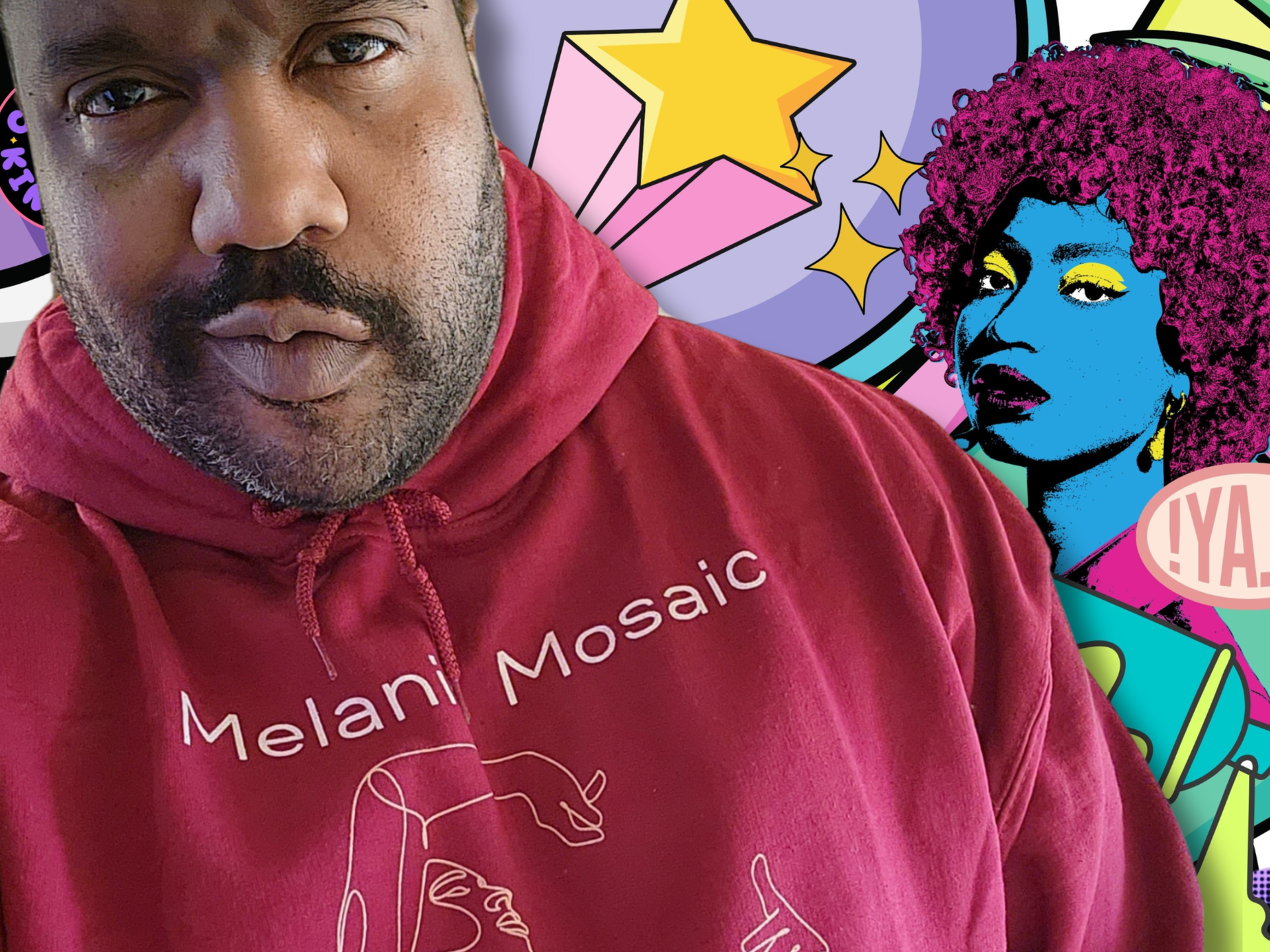
Exploring Winter Guard, Drum Corps & Mental Health, with Jarid Polite
I've had the pleasure to finally sit and chat with Toronto-and-NYC-dwelling Jarid Polite, founder of the Melanin Mosaic Performance Ensemble. Today’s conversation will touch on an activity that hits home for me: the marching arts. Specifically, we’ll be looking at mental health initiatives within the marching arts, or—for those unfamiliar—the activities of color guard, drum corps, and winter guard.
Jarid quickly shows us that outside the "sand box" of pageantry arts competitions, there exist miles of sand and shoreline for the unique expressive activity that he and I both have come to love in our lives. Jarid kindly shares with us his own lens and upbringing within the activity, before we transition into how we met and what kinds of conversations offline prompted this podcast episode.
Please give a warm welcome to Jarid Polite, grab your favorite warm beverage, and share this sweet space with us. In our conversation we spin, twirl, dance, drum and dream into a more equitable world.
Listen to this Equitable Wellness podcast episode with Jarid Polite
Jarid Polite talks care culture and building on mental health support tailored to the marching arts.
"We have not been trained to care. We've been trained to produce results."
Where else to listen
YouTube | Substack | Apple Podcasts | Spotify
Read the full transcript here
00:00 — Shayna introduces the episode and guest, Jarid Polite, as well as the focus on mental health in the marching arts.
Shayna Grajo
00:04-01:17
Welcome to the Equitable Wellness podcast. I'm your host Shayna Grajo, and this podcast invites practitioners dedicated to equity and liberation work to take the mic. We look at how coaches, holistic practitioners, healing artists and businesses incorporate collective liberation into their practice. Today, I am joined by Jarid Polite of the Melanin Mosaic Performance Ensemble.
Today's conversation will touch on an activity that hits home for me, the marching arts. Specifically, we'll be looking at how mental health initiatives within the marching arts—or, for those who are unfamiliar with the marching activity, the activities of color guard, drum corps, and winter guard, for instance. We will see how mental health for youth and teenagers in the performing arts are important, so let's talk.
Jarid, welcome. Tell us where you're calling in from today.
Jarid Polite
01:17-02:08
Well, thank you for having me today. It's an honor to be here with you, Shayna, in this podcast to talk about mental health and marching arts. I am currently sitting in Toronto, my part-time home, with my other home being in New York, and I am having a great day. It's really exciting to feel like people care about a topic you care about and to, you know, really dig into a conversation that we've had offline and, you know, how we've connected in other ways. It's really invigorating and I just need a conversation. All the conversations are needed, but, you know, I love connecting with people who know that the conversations are needed. It helps me.
Shayna Grajo
02:08-02:39
It is a conversation that's needed and I think that he conversations are starting to trickle into the space, into our shared vernacular. We can get all into how we met and that whole bit. So, yeah, it's. I'm honored to have you on the podcast. Because I hardly ever these days talk about winter guard or color guard or drum corps in a public sphere anymore.
Jarid Polite
02:41-02:42
And I do all the time.
Shayna Grajo
02:42-03:28
I love it. Well, we can be in each other's bubbles and each other's worlds for this episode and share that space then.
Yeah, so I'm calling in from the South of Spain, in a city in a little bay area across from the rock of Gibraltar called Algeciras.
I live in La Línea de la Concepción, which is to the north of the rock of Gibraltar. My boyfriend lives here in the city, across the bay, by like a 25-minute drive, so it's a bit later here. I've had my day happen, I'm kind of winding down.
But I'm glad to have that kind of fresh, invigorated Toronto energy here.
Jarid Polite
03:28-03:42
I mean, it's one of those things where it's not freezing cold today, so I have to appreciate the sunshine and the people are shining sun on me back. So that's what we are doing.
Shayna Grajo
03:43-03:58
Yeah, you just got back from taking the dog for a walk. So I'm imagining that pristine Toronto air. I've only been to Toronto once, but it was a good time. It's a pretty nice place.
I like it.
Jarid Polite
03:59-04:51
Yeah, it's one of the most diverse places I've ever been in the country, in the planet, and I say that wholeheartedly. There are not many places where people mix from all walks of life in a place, and it's not as segregated as other places. I'm from New York City, where there are a lot of people living on top of each other, but they're most segregated to their own areas.
In Toronto, it's like everyone is part of their own group of people, and it's a really cool place to visit. And you instantaneously notice it, the diversity and riding the bus or the train, you just notice. There's so many people from different places here and everyone's talking to each other and having a good time, it's really cool.
You should come back one day.
Shayna Grajo
04:52-08:49
I love it, yeah. The last time I was there, I had shaved my head, so I was like I was literally feeling a lot of things like through my scalp. I was at this contact improv jam, and, you know, kind of like, literally rubbing my head on everyone's body parts who were at the jam. It was a different time in my life, but I was movement, it was free, open, you know, contact improv movement.
But I really enjoyed that because it was the first time I had shaved my head and my hair, right? So just like being able to feel all these things. I don't know. I loved it. I respect that, neither here nor there, but that's just a good memory of, like, yeah, having my head shaved.
And then, like people not only touching it with their hands, but their knees, their bellies, their elbows, their legs.
I'm like, Wow, it was a sensation.
It was, you know, one hearkening to diversity and diverse movement, diverse people, you know, a cross-section of different interests and and lifestyles. That was, I think, in 2011, 13, 12, it was a while ago now, so yeah, speaking of things a while ago, we're gonna come back to.
For me, my winter guard activity and my color guard activity was a while ago. I want to say also that with this episode, I'm announcing that I'm actually going to be taking an indefinite break from the podcast. So, with having Jarid here today and then another guest that's coming up this month, it will be kind of the ending of "Season One" before going on an indefinite hiatus. So again, happy that you're a part of Season One, maybe the only season we don't know.
But still, if you are watching this today, you can see this on YouTube in Substack and find full episode notes on the Substack. Called Equitable Wellness, which also I might change the name of that. But you can subscribe to my email list that will have my writings, including this podcast and others. Join the community, support the work and have the final episode or episodes dropped into your inbox.
If you prefer to read, a full transcript of this podcast will be available as well on my online home and my online blog, shaynagrajo.com. Link in the notes. So let me introduce now Jarid Polite, and that is the last name.
I did ask, "Is your last name really polite?" And it is.
Jarid is the founder and artistic director of Melanin Mosaic Performance Ensemble, a growing collective that reimagines the marching arts through storytelling, movement and representation. Guided by his deep love for movement, film, music and theater, Jarid blends disciplines to create experiences that speak to both heart and heritage. His work celebrates the brilliance of the African diaspora while exploring what mental health looks like within the marching and performance community. Grounded in empathy and care for others, his mission is simple to create art that moves, heals and builds community.
Jarid Polite
08:51-08:53
That person sounds like a pretty cool guy.
Shayna Grajo
08:55-09:03
Who could that be? Yeah, no, but what a beautiful, beautiful mission.
Jarid Polite
09:03-09:32
No, just hearing it back is beautiful to hear, because it honestly is true to my mission and my work with Melanin Mosaic.
And it really does represent what I wish was available to people such as myself and others much sooner. So I thank you for introducing me. Thank you.
Shayna Grajo
09:33-10:10
Yeah, thank you, Jarid, for sharing with the world and with the globe your valuable mission and your valuable cause. That we're gonna speak a lot about. Because again, yeah, a lot of strings have kind of brought us together.
So let me get into it.
We'll talk first about, for those who aren't familiar with the activity of the marching arts. What is winter guard and what is color guard? And then we'll get into how you and I met. So tell us, what is color guard?
Jarid Polite
10:12-15:02
Okay, so color guard. Everyone, most people have seen color guard when they watched a parade. It's the flag carriers, military style wise. It was people who carried the American flag, or the I guess whatever the country's flag, and their battle flag and all that stuff. The "colors," they call them, of the military.
And then somehow some people said, Hey, why don't we just spin these things around in circles? And color guard is born.
And it has evolved since then into its own world, separate from the percussion and the brass instruments that it's been associated with most of its existence. Again, being part of the military organization, military parades. And some genius people in the 70s or 60s and 70s decided to spin them in different ways, and found friends who wanted to spin these flags different ways.
And color guard, in the way of artistic interpretation, was created, and now if people think of color guard, you should think of rhythmic gymnastics. But with a flagpole or rifles and sabers that people toss into the air, much like an ROTC style. But if a dance company decided to throw it in the air, what would that look like?
How would their bodies move? How would that interpret the equipment? And the storytelling aspect of not just a flag, but the flag being an extension of the body and not a solid piece of equipment that stands and moves by itself? And that's where winter guard has evolved, from its humble beginnings of high step marching and slams like with parade bands, to literally being a Broadway Emmy Tony award-winning world touring show.
That now has not only moved the needle in terms of what the level of entertainment value is for marching artists in general and color guard as a whole. But now, color guard can be found in places like Philippines, Indonesia, Mexico, Puerto Rico, Europe, China, Japan. It's grown so much in the last couple years and it's so nice to see because a lot of the time color guard is based...
What we're doing now is based on competitive nature, which is great. I've always marched competitively until starting Melanin Mosaic and I loved competing and the camaraderie of the group and all that kind of stuff. But at some point, you don't necessarily have to be contained by competition, and that's where Melanin Mosaic has released the stress and the pressure of competition.
And saying, why is that the only way we can do this activity when we can do the same exact thing, same exact flag, dance music, et cetera, without the gaze of a score sheet? So we do dance and community work, we do dance on film, we do dance performance-wise. And we're just trying to really create something that hasn't been seen before.
I like to say, now we're like trying to get the banana ball of marching arts, you know, the span of bananas. Where they are just having fun and having a good time, experiencing people and the fans versus worrying about who wins the game. And that's where we're trying to be, entertainment based and not competition based. But yeah, it's a fun activity that most people around the world may know. One person in their whole life who does it, or your whole family does it.
You just don't know about it until they tell you they do it, which was sort of my introduction to marching arts, was. My father said, Hey, I'm going to this thing. I went with him, I got hooked as a horn player.
And then, recently, in later years, I realized that, oh, my grandmother was running this group, my aunt marched here, my mother had known people. I'm like, Oh, so, everybody in the world knows drum corps.
It's underground, so if you know about it, it's like playing darts, you know, darts and championship darts. People are playing championship darts in bars all the time. You got to know what the bars are, and I didn't know that there was a place.
To be competitive and have a good time, and learn life skills and leadership, and get out the house and travel the country. And this is, what, you know, marching arts and color guard has done for me, and I'm excited to talk more about it.
Shayna Grajo
15:03-15:21
Ah, me too. Thank you for sharing such a broad breadth of the ROTC associations and the militaristic kinds of origins with the artistic pageantry. That does have scoring generally, and judges. But the vast extensions, way beyond a tarp in a floor, way beyond a football field, right?
Stages, all sorts of screens and portrayals. I mean, I know you're really into film and and all sorts of fine arts, right? Not just like the 50 yard line, not just yeah, judges.
Jarid Polite
15:21-15:52
Nope.
No, that's not my life, that's not anybody's existence beyond this entire world of marching arts. That we do something wrong. And that's where we're trying to inject moments of, oh, I could do this without that pressure, yes.
Shayna Grajo
16:02-17:19
It's good to know, I think.
I mean, we will get more into it. But yeah, I think a lot of the people who are, whom I grew up with, let's just say, are US-based. People who are in a group that compete in some circuit, somewhere in their state, or in their locality, or in the country, or they compete through drum corps.
But yeah, there are many other... there are other applications of taking it to the stage, taking it. You mentioned the Tony Award-winning production of Blast, which so many of us remember and were very inspired by as well. Yeah, but our intersection that we're concerned with that we'll get more into is mental health and this activity.
So before we get into that picture, which is kind of the thrust of how we started talking to each other, right?
Tell us more about, like, OK, you mentioned how you got involved individually, but walk us through a little bit of your kind of whatever marching resume. What state were you in? What was the group you started with, and how are you involved today?
17:19 — Jarid shares his extensive background in marching arts, detailing his journey from junior drum corps to founding Melanin Mosaic.
Jarid Polite
17:19-26:04
Excellent. Going back into the beginning of my marching arts career, I started in a junior drum corps called the Cadets of First Baptist Church of Crown Heights—a long title—so we shortened it to Cadets of First Baptist Church. And it was a literal, community-based organization. Like I said, my father was the food and transportation coordinator for the drum corps.
He wasn't in the household, so when he came to visit, I went with him, didn't matter where he was going. So he said, Do you want to go with me? I said, Yes.
I had no idea where I was going. All of a sudden, I ended up in this rec center church back room. With all these young Black kids and beating drums and playing horns and spinning flags and being bad. And I was like, This is my Shangri-La, because this is where I'm going to be for the rest of my life.
I didn't know it until the next time I showed up and then I was hooked. I remember they gave me a horn and said, Play this, I tried it, it was a euphonium. Didn't like that.
Didn't know I didn't like it until I went back the next weekend. They said, What kind of horns you have? And I said, I don't know. I had a big bell.
Was it a mellophone? Sure, so I became a mellophone player for like, three years after that, which I am so thankful for. Because euphoniums are too heavy for me and I was too light.
But then I went from horn player to drum major. I dabbled in color guard and other groups. We changed a bunch of names. Won a championship in a local Garden State circuit. Did DCI, came in last a couple of years, then second-to-last, and then not second-to-last. It became better and better and better.
And then eventually, I moved on to another group, to quote unquote "age out" of the organizations. DCI, Drum Corps International—which is the biggest governing body of drum corps sport in the planet, basically. And then I moved from there after I aged out and then marched with some other senior corps groups, which are basically 21 and above on average.
So you got people who are smoking cigarettes and drinking beers and then drumming. And playing the horn. You're like, oh this is different. These some grown people now.
Like, oh, you go out at night to the bars, like, what, we going to the bars, so cute. So a very different environment. But it was a learning experience and I had that good time.
I did that in Syracuse and then I continued to just create more opportunities for myself. I marched in Philadelphia with Light Brigade, I then went to Boston to march with Blessed Sacrament. Taught a few places. Did this and that. And at the end of it all, I started to realize that there was no longer a place for me competitively.
My body was saying one thing, my distance to the activity was changing, and there was no longer a connective performance opportunity for me to move, beyond transferring my body to another location where there is color guard. And that wasn't in the cards for me, and it became really clear that I wasn't the only one who still had the motivation and the drive to perform.
But I didn't have it as my sole identity. And a lot of my friends are looking around and seeing that. They were depressed about no longer being able to compete or do color guard the way they used to do it, whether their bodies were no longer, you know, could do those splits and kicks and flips and turns and stuff they were doing, or they just weren't in a space to do it anymore.
And it really showed me that there was a connection to the arts in the marching art activity. That if these two people who I know are going through this publicly, I'm sure there are a lot of people going through it privately. Who I will never even know. And that was one of the catalysts for creating Melanin Mosaic, was to give people such as my friends who are older, you know, 30s and 40s, who still have that passion for the marching arts and activity, an outlet to continue creating.
Because, like I said earlier, you can compete: great, but the skills that you have and acquire and trained don't go away because they're not in front of a judge. Most times, you will train and perform your show and routine, not in front of judges.
You maybe have six, seven shows the whole entire season, but the season starts in November, September, and you're going until April. But you're only doing six shows in front of judges. So what are you doing the other times? Performing the show, having a good time, relating to experience with your friends and camaraderie. All that kind of stuff and all that sometimes goes away when you're by yourself now and you're no longer marching. Your community goes away.
You're not seeing the same people, you're not feeling connected the same way. And that was a huge thing that I noticed from my friends and I said, How can I change the trajectory of their perception of the marching arts? And so far, it's been going pretty well.
We've done some film work, done some live stuff, and it really does create a vehicle for people to see themselves in a different way. Also, it gives people of color who might not see themselves fully represented in the marching arts the way they prefer to be. And I say that in a way, that there are two sides of the coin when it comes to marching arts.
And I've been realizing it more and more as I investigate what it means to be a marching artist outside of competition. That especially what representation means and diversity means, because there are a whole community called HBCU Community (Historically Black Colleges & Universities).
The movie Drumline People with Nick Cain.
What's that boy's name?
It's a Nickelodeon, I can't remember his name, Nick Cannon. There you go, thank you. He started a drumline in that whole world.
It's the HBCU lifestyle, high step show style, marching band lifestyle, where 99 98 percent of them are Black people. So, to say that marching arts, as a blanket statement, needs more representation is false. Marching arts—the way that we have perceived it, the way that we do it, the core style, the dance-y, heavy dance style—is very much lacking representation on a surface level.
And because it's hard to see yourself in certain places. I decided to create a place where you're always seen. So you don't have to question, Am I being represented in this activity, even if I don't know about the HBCU side of it, because I'm not associated with that world?
I wouldn't want to jump in and be like, hey y'all, I'm Black, let's do this. I don't know about you, it's just different worlds. You have to be respectful.
And I've been doing that recently, connecting with groups in Atlanta, providing flags to different organizations, and making sure that I'm being respectful of that community. Because that is a lineage of generations, decades long, that drum corps can't even fathom in that sense, because the marching arts is a mostly small, weekends—sometimes you do a couple months—thing. That HBCU college life is literally 365. Once you start, you're going through college and school, all the people for four years, and then you have a lifetime of brother and sisterhood afterwards.
So it's just different than a drum corps legacy life, and it intrigues me beyond belief. And I'm slowly getting more accustomed with that world and letting them know that we exist as well.
So that they have a bridge to the high step and the core style of marching arts. And it's really important to make sure that we understand that representation isn't only by race. Different people have different afflictions, different abilities, whatever that might be, that make them different and unique and special. And we need to make sure that people from all walks of life are represented in the marching arts. And that's something that we are striving for in the future as well.
Shayna Grajo
26:06-26:21
I love it, this is so multifaceted.
I like that there's kind of, I don't know, I'm imagining, like a bubble, and then you're like, just outside that bubble, and then everything beyond, you know.
Jarid Polite
26:23-27:20
I call it my sandbox. I call it the sandbox, I call it. I say, the marching arts sometimes is playing in the sandbox while you're on the beach.
So we're boxing ourselves in, playing in sand, while there's a whole entire beach, miles and miles and miles of sand, an opportunity to create giant sandcastles. But we're playing in the sandbox, trying to be bigger than the sandbox allows. But we're not trying to change the size of the sandbox, just putting more people in the sandbox, more sand in the sandbox from outside the sandbox.
Like, why are you doing that? There's way more sand out there, you can walk 12 miles of a beach. You will see different things, meet different people, experience different lifestyles, all that.
But you stick to the sandbox, you're only getting that perspective.
Shayna Grajo
27:25-28:37
Well, thanks for taking me out of the sandbox here because...
Yeah, I think, the majority of the associations of when I think of mental health and color guard, or mental health and winter guard—I think it's probably still within that realm of the sandbox. But we can explore outside of that and know that there's way beyond it. But in our shared context of the world we both think of, when we talk about the world I think of, we can start there.
Because it's one of many starting points and there are many people who are still involved in the sandbox.
But yeah, thanks for letting everyone know that there's, well, you know, way more beyond it.
Let's talk about Melanin Mosaic, what is its mission? And yeah, just tell us more about what you're up to with that.
28:39 — Discussion on the mission of Melanin Mosaic to foster connections and provide a supportive space in the marching arts.
Jarid Polite
28:39-31:35
Our mission, generally speaking, is to make connections within the marching arts community for those who may not know that they have a place here. Recently, I've had a conversation with an organization that is becoming more well known for their brass instruments and their drums. Not necessarily part of what Melanin Mosaic does on surface when it comes to instruments.
But I like, I said, I was a former horn player. So I've always had that soft spot for a nice brass line and a nice strong section, whether it be drums or whatever. And being on social media—I know you're taking a break, but being on social media, just scrolling through, I happened to find a group in Uganda that is doing brass training for their little community.
And they were looking for brass instruments again. I have a sore spot. I grew up in the marching arts in the inner city, way down the bottom of the barrel of how it is today. Dues were like $300.
We had a summer job to pay the rest through the City and it was like, you know, bare bones inner city youth. We are hitting the streets. We have people who are on parole at 17 trying to go through, you know, drum corps tours and have to get permission from the parole officers. That's the kind of life that we were living, and very different than what people are living now.
And it's the community sense that we don't have anymore. So to see a group of Black people in another country trying to better themselves through music and art, I immediately said, Hey, if this company that I'm seeing online is as true as they say about what they're doing for the people and not just commerce. Then maybe they might be interested in working with this other group. And I had a conversation today.
And we are actually supplying this organization in Uganda with brass instruments and how to actually fix your brass instruments and do training. So there's not a system of, oh, we give you something and then you're screwed if it breaks. Or, you know, here's a body—dance or flag—and you can't train yourself to do it any more. Oops, sorry about you.
So we're giving you tools. And stuff like that is what fuels Melanin Mosaic. Connecting people, connecting culture, connecting diverse voices. And that is, in a nutshell, what we really are about. More than producing the art itself, is being a catalyst for the art to be produced through our means and our productions and our connections. We've reached out to other organizations to help do other things. We're going to Dayton, Ohio, this year and hopefully getting a group to watch the Dayton Black Dance Company and the Dayton Ballet Company perform after Dayton, Ohio's World Championships.
You know? So we're trying to be connecting pieces to more than just the competition world of marching arts. Because, like I said earlier to somebody else, there will be way more people not competing than there are competing. So if there are brass players out there who can do that without the need of competition, and there are drumlines doing NFL football games and everything else. Why aren't there more opportunities for color guard to present themselves in a way that is no longer in front of judges?
And like I said, it's one of those things where, if we break the system and break the mold and break that sandbox just a little bit more, people will start reaching out to them, to other things. And say, hey, let's incorporate color guard into our dance company. Let's incorporate color guard into our theme park more often. You know, we have parades, which is great. But some of those aren't even, you know, giving you the satisfaction of showcasing what you can do. It's like, Yeah, we're going down the street doing, you know, fun things.
But to really have real artistry in what you're doing, is different, and I appreciate having people who are not just talking about community, but talking about artistry. And that's where I think Melanin Mosaic is finding that sweet spot of community and artistry, mixed with the mental health and the wellness, and that's what you get with Melanin Mosaic.
That's how we form our ecosystem: through artistry, care, and representation.
Shayna Grajo
33:04-34:14
This is the best mix of artistry. I mean, this is like the finest of the sand, but I mean, again, there's all kinds of sand, right? All kinds of seashells, you know, all kinds. So I really appreciate you showing me so much more of what you're up to.
In the sense that, I feel I'm kind of seeing way more of the involvement of, you know, your hands in different cross-projects, but across, kind of, like making meaning and touching people's lives, right? And just having the arts and the marching arts being a tool and a conduit for just facilitating all sorts of great things.
Like, that is a gift to give. So I really appreciate all this and I appreciate your dedication to the art. And serving with your life and your blood, you know, your bloodline, your lifeline, your vitality, your commitment with your livelihood.
Jarid Polite
34:14-34:15
Yes, absolutely.
Shayna Grajo
34:17-34:21
So yeah. Thanks for, again, just...
Jarid Polite
34:21-36:54
No, I do it because I was called to do it, and I always say, it's never me doing it. Because if I were the one doing it, I would have failed a long time ago. So I know that it's not me doing it. I remember the day that I started Melanin Mosaic.
I rose out of my sleep and something said, Start. So I grabbed my computer and I just started.
That was it.
Like, I just grabbed the computer and said, Okay, let's see what this is about. And, you know, Chat GPT and I are very good friends. That's my assistant. We go through a lot of questions in my brain together and formulate ideas.
And it came out that, you know, my best friend was like, Hey, put these two names together, and I said, That's great. Here we go, Melanin Mosaic. And he helped, and it's been such a rewarding journey, even though it feels like sometimes I'm alone on an island.
Because there's no blueprint for this, really, you know, it's not something that I can look at other groups and say, oh, that's how they did it from scratch. Most other groups that I've seen do it are because they are in a location that, sometimes, there's nothing else to do.
So they create organizations that go through color guard, or they are at a school that somehow has the funding to do color guard. And there's not very many places out there, again, that are not thinking of it as a school activity or a competition activity. Unless you start going to other places outside the U.S., where there are just clubs, and they just have color guard fun. And I watch TikTok now and see kids who are like eight, nine years old doing amazing tricks.
And I'm saying to myself, you are eight years old and with no shoes on, and you're doing color guard. That blows my mind, the reach of the activity of color guard, because it is so accessible. It's a six-foot aluminum pole and a flag, and you just start. There's not a lot of, you know, barriers to entry.
And like a horn player or a brass, or a drum, or something like that. It's just, you have to learn how to use this pole and move your body with the pole, then you can start adding your skills. So it's such a rewarding experience to be part of the ecosystem of marching arts and to really shine or try to shine and do it my own way.
36:54 — Jarid emphasizes the need for mental health support and breaks down the barriers of competition-focused environments.
Shayna Grajo
36:54-40:14
Yeah, I like thinking of the ecosystem. And you've produced other videos I've really enjoyed—talking about just creation of art in general, and dance, and creating for pleasure and joy, for the sake of pleasure and joy, right?
That I also really resonated with, which is, I think, a very important message in our age.
But yeah, over here in Spain, I'm in the land of flamenco. And so there are people walking on the street, singing their flamenco. And then, like, clapping their hands to this and that. And then some people are doing the little dances that go with it. And so when I think about like a flag.
And then going along with the pole spinning along, and then, oh, all of a sudden there's a horn player, oh, here's a drummer, you know, it's kind of like, you got your guitarist, you got your singer, you got your flamenco dancer. And that's all you kind of need really. To just keep the party going and just be creating wherever you can.
So, yeah, returning a little bit back into the sandbox, as it were, our metaphor for the activity, kind of, as we know it of. Like the indoors, the outdoors, and the kind of different governing bodies that there are. I want to start pivoting a bit toward wellness and mental health, because I know that's a big platform that you're kind of—not provoking or instigating, but you are in a way like agitating—forward. A sense of care and a sense of creating systems of care designed for the unique activity of the marching arts. You know, something that I enjoy about this Mosaic of all these things coming together is, you're providing a lot of solutions where other solutions have not been brought forward, right?
So the way that you and I have met. I'll give a shout out to my sister here, Megan, who I'm sure will be watching our episode at some point and or listening along.
One of my sisters from forever, a marching sister of mine. We have both gone on record for a podcast to just talk about some malaises of the activity that we experienced. When, way back in a day, for instance, we marched in the Santa Clara Vanguard together. And we'd marched other groups. And you can hear that story at another time. But something that Megan reminds all of us, in my opinion, that she and I talk about, right?
Is that it's usually never up to the victims of abuse to kind of bring forward the solutions that we're seeking for preventing abuse in the activity, right? And there's a lot we can talk about with regard to mental health. But what I enjoy about you, Jarid, is that you're, like, proactively bringing forward preventative care and solutions, without it necessarily being asked for, if you will.
Jarid Polite
40:14-40:14
Verbally.
Shayna Grajo
40:15-40:25
And so that's something very unique.
So gosh, I don't know where we're going to start talking about it.
Jarid Polite
40:25-45:58
I will start because I will go back in time. The reason I do this is because people such as yourself and Megan and others who have had experiences in the marching arts that weren't all gumdrops and sunflower seeds, and yay, you know.
There are more people who I'm discovering way too often nowadays that have had traumatic experiences in the marching arts. Even to the fact where I was talking to somebody the other day who I'm trying to work with. And he marched drum corps recently, you know, a couple of years, and he's even saying to students like, don't do drum corps.
And I'm hearing that I've heard it, you know, years ago, when band directors were like, don't do drum corps.
I don't want my band doing drum corps, and it always boggles my mind when these drum corps organizations are looking for people to spin and dance and play horns and blah, blah, blah. And there are way more marching bands out there than drum corps, so you should have no problem fielding a marching ensemble. But because of the way that the representation has been going recently—through the use of social media, through the use of Reddit, through the use of people not caring anymore. Thank you, 2020. And the whole Black Lives Matter movement and the whole thing, so that Covid shook people up out of their, you know, their fear.
You hear way more stories of abuse and trauma in the marching arts.
And I know for a fact, my marching arts career. We were abused, but we didn't know it was abuse. This is 95 96. We're all young, inner-city kids being taught whatever this thing was.
And we were unruly—completely unruly—there's no way you can tell 15 16-year-olds who are no longer at their mom's house for a weekend, to sit down and be quiet and listen to me, because I said that you have to. Like, it's just a different world. So if shoes had to be thrown, and sticks and chairs, and things had to be done.
It was sort of like, this is how we raise children in New York City in the 90s. But it was abusive. But I also say to myself, I am thankful that I went through that and got through that on the other side. Because I recognize now what not to do going forward. And to recognize that my upbringing in the marching arts is so different than other people's who are non-inner city youth, Black, of color. And this marching arts activity, the way we do it, is very heavily white male. So to have that lens of, I've been on that side, I've been on this side—really informs why Melanin Mosaic is such an important part of the marching arts community, or should be. And why mental health needs to be discussed way more often.
Because if I'm experiencing this in my little snippets of information I'm capturing offline from people such as yourself and Reddit and all. Then I know there's a whole super large community of people—old, young, in between—who have not had the best experience in marching arts. And they are either not talking about it to save face of the organizations they come from, because I just had that conversation three days ago. Or they are being verbal about it and taking a stand and voicing what happened to them, such as yourself and Megan.
And that's what fuels me to tell people, Hey, there's an issue here that we're not talking about. We should really make red light balls go off. Because there are drum corps out there and organizations folding because of accusations of abuse, no matter if it was 1981 or two years ago. There are groups folding. And no one has made that decision to be like, Hey, besides this little one certificate we can take online and call it a day: Let's have that real conversation about why we need to make mental health a much more important part of this activity than we do now. So I thank you for just voicing your opinion, being a voice box, so I can lean on that and say, Okay, I'm doing something right.
Because if these people are talking about it, then they're not the only ones who are experiencing this. I can be the connecting pieces to finding help for people in the marching arts. Not saying I need to know everything about everything because I'm not personally trained in this kind of stuff, right? I'm just discovering myself and understanding what these triggers and what this "trauma-informed" actually means.
Shayna Grajo
46:02-46:19
Uh -huh.
Yes.
Yes.
Yeah, I'm thinking of, like, how do we start addressing it? Where do we address it?
Jarid Polite
46:19-50:19
Podcasts like this, podcasts like the ones you did.
Being in the rooms. I'm actually working on creating a, I won't say Ted talk, but a session for drum majors—oh, sorry, not drum majors—band directors, from HBCU communities, next March. To see if I can get in and present to them the reasons that mental health should be explored more often. There is a world in which mental health professionals should be examining the heck out of marching artists. Because of the way that we create these environments, in this culture. It's unlike anything I've seen before. Because there's no payment on the other side of this thing, really.
If you get a band director job, great. You don't need to go to drum corps to do a band director job. If you get on a staff, great, you don't have to do drum corps to be a staff member. But if you go through that fire and pay all that money to do it and come out on the other side, not expecting anything, then you've done drum corps.
Because that's 99 percent of people who never get that job. To teach or perform, or write drill music, or write sheet music, or drill or teach color guard, or do Melanin Mosaic. There are more people like that on that side than are actually finding joy, creating something useful, from the marching art experience. And if we aren't being explored from a social aspect...
Because you are putting people together from all walks of life who pay their money to do this thing and get yelled at and critiqued and treated a certain way, then they have their autonomy to be like, OK, I'm not doing this anymore, this is not for me. I'm leaving. And then you get mad because they left you a hole, but you treated them like crap.
There are way more people nowadays who understand that they have control over what they have next. And it becomes a speaking box for people who no longer need to fear. And I think that's one of the biggest parts of Melanin Mosaic, is not having that fear.
Because we're not playing in the sandbox, like I said earlier.
I will approach people and say, Hey, this is what I believe in you. I don't know you. But this is what I'm seeing. And I don't know if you're the right people who should be teaching the activity, or doing this thing this way.
There's better way. And if we can get that message across that there's a better way, then we're doing our job. Because it really is a huge social experiment. You go to marching band in high school, that's a diploma.
You know what you're getting, you're not studying high school marching band. You go to college, you're not studying college band, you're getting a diploma in something else.
And then, to march drum corps, you are only doing drum corps. To march winter guard, you're only doing winter guard. There's no guarantee of anything else after that. So, to have all those people together—different walks of life, different nationalities, different races, different ways of thinking...
I could have marched with people who are racist and I don't even know about it, who are homophobic, I don't even know about it. People who are below the poverty line, you know. It's just an ecosystem that is so unique.
It should be studied more, especially in the mental health capacity, because it is a melting pot of personalities aiming for one goal with no promise of anything else on the other side. And that's wild to me. It's not just a one-time thing.
People's eight, nine, ten years of drum corps, marching band, winter guard cycles all year long, and you're like, you are mentally messed up. I know you are.
You have to address some of this stuff. So that's what we're trying to do, to bring to light.
Shayna Grajo
50:22-50:29
Yeah, it is very unique in that way, where you pay to do it.
And I mean, what else do you pay to do?
Jarid Polite
50:30-51:09
There's no professional league! We can get paid by joining the rugby league, or the lacrosse league, or the dart league. There's a league for you to get paid as a professional. There's no particular league for marching artists, unless you are doing the NFL Drumline or you happen to get into the military band.
You know, something of those natures, or you're teaching. But besides that, most people have no outlet beyond what they're doing. And that's it. And like I said, when you get dropped off, you get dropped off, and that's it.
So it's like, you've got a lot of skills, what do you do with them?
Shayna Grajo
51:10-51:36
But I guess here's a question, why do you think mental health infrastructure has lagged behind?
In winter guard and in the activity, and in drum corps. Maybe physical health kind of comes first when we think of it, but why has mental health been on the back burner?
Jarid Polite
51:36-56:17
It's something you deal with in silence. When you are injured, you can't necessarily hide an injury unless you are playing it off, and at some point, that injury will produce itself into other problems. But you can see when someone's limping, you can see when someone's favoring one side of their arm versus another. So you can see that, physical.
You can see what they're thinking, and that's the difference.
So if we had a big wall that everyone's thoughts popped up on the screen. And you're like, Oh, I need water, Oh, I am hurt, Oh, my dog just died and I don't know if I'm here. Oh, I don't like the way that the instructor just talked to me today. Oh, that person doesn't respect my boundaries.
If you had those popping up on the screen, then you would talk about them more.
You would say, Hey, I see above your head you have problems with so-and-so, so-and-so, so-and-so, so-and-so. Let's talk about that. But what happens is everybody okay? Yep.
Because you don't be singled out. You don't be the one standing in the room like, everyone's ready to move on, or whatever, you're like, I can't get this. I have dyslexia and the way I think about things aren't the same way. So I can't learn the way you teach it.
If you're not saying that, people don't know that. And now you're on your own, fighting your own self, to figure out how to not stand out in this room. Because we're not trained instructors.
We are not. Most people who do color guard or teach color guard or teach marching arts. Unless you've gone to school for teaching, you are not a trained professional teacher at all. You are a person who has the same skills that they look for to do the job and they ask you to do the job.
That is a recipe for disaster.
Because you don't have any of the skills to handle people, let alone youth. When you have a child yourself, haven't had a child, haven't seen a child, don't talk to children at all. And you're thrown in front of children, like, Hey, this is what we do.
Not knowing how they learn, what their things are. And you're thrust into this world and then asked or charged with producing a result that may or may not come. Because you don't know these kids, you don't know who has a learning disability in this group, you don't know what the traumas are in this group.
You ask them to do one thing, they're like, I can't do that next thing. You know, they're a problem child, but you don't know what the problem is because your mindset is on, I got to get these 12 people to do the one thing that I'm trained to do. I'm not trained to handle problems.
"That's what parents are for," and the parents aren't trained either. So what do you think they're going to do? Brush it under the rug. "Okay, so it's all good. They don't. It's fine, you just whatever."
And that youth, or that person, no matter the age now, is feeling different about themselves. Whereas physical therapy can say, Oh, that's a broken arm, I can fix that. You're back on the field.
Even then, that's a problem right there, because if they don't heal from that problem, or that injury, now that's a whole other psychological weight that they're dealing with. And I know we've had conversations with Megan about, you know, performing on broken ankles or sprained ankles.
And I was like, I watched that video and I said, you did that? Amazing!
I'm watching The Physical 100 now on Netflix. Some people hurt themselves and they keep going. I'm like, that's mind over matter. But if you have the choice to not disappoint people, would you still do it?
Or you're just like, Hey, I'm gonna make sure that my self is good, because if I'm not good, then we are all not good. Which one do you choose? Do you choose the self-sacrifice, or do you choose, you know, whatever?
And sometimes people just go with it and keep quiet. So that's why we don't necessarily make mental health an actual issue. Because no one's talking about it until it gets to the point where it becomes a situation that is beyond control, beyond salvaging. And now you have to have some legal questions asked of your organization.
And people would rather just ignore it than have to deal with it. Sadly.
Shayna Grajo
56:22-57:02
Hmm.
Let's... Talking about, like, when things get out of hand...
I am actually not familiar with an incident that happened like, you know, this is going to kind of a dark, well, you know, more traumatic event.
But there was a shooting at a percussion event that you referenced, that—me, not being a part of the activity, nowadays, haven't been for years. Although, as you said, like, the skills never go away. And when it's raining, I twirl my umbrella.
Jarid Polite
57:02-57:04
See? It's lovely, isn't it?
Shayna Grajo
57:04-57:08
It just never goes away.
I mean, I can bust it out anytime.
Jarid Polite
57:10-57:12
Like a party trick.
Shayna Grajo
57:12-58:33
Exactly. So when I went, I mean, I am around kids, still, to this day. I do do some teaching.
A couple years ago, I taught English for a few years for my visa to be here in Spain, but now I'm back in the classroom. Actually, I was there today because I'm a substitute for these nine to 11-year-olds who are in an academy for learning English.
And they just need a substitute teacher for the month. So I'm there. And oh gosh, it was so adorable. Like hearing these kids sing, like the 12 Days of Christmas, and kind of like, skip, you know, they know, like "Five Gold Rings."
But then they're kind of, like, you know well, like uhh, 12. OK, so aside—but it was very cute listening to them today saying.
My point, though, being like, in general, not participating actively as an instructor anymore in DCI or in the land of color guard in the proverbial sandbox now.
What was I asking about, right? I was not aware of this very traumatic shooting, so there was not really a response. Am I correct?
From, was it WGI?
Jarid Polite
58:34-62:29
It was a WGI event in Pasadena, California. A man, older man, I don't remember the exact details, knocked in or walked into the event, didn't pay money. And then someone said something to him and he had a pistol and he fired it at a gentleman and it hit him. And the response from WGI was,
There was a shooting.
Pretty much, that was it. Like. All right.
And I remember waiting at least two or three days to see if there was going to be more of a response. The same way, I guess, we see if it was on par with a school shooting, and then they say, our thoughts and prayers are with you, and that's about it.
And it triggered me in a way that... reminded me that these organizations—these circuits that we call them—are very much production minded. They aren't in the business of care for the performers. They're in the business of making sure you have a place to perform and a date to be there. And that's where I felt the response was from WGI at that time, and the community as a whole.
It was like, "OK, cute, the next show is..."
Versus, "If you need assistance. If you need help, please reach out to these people, because this is a traumatic experience that happened in our environment." It wasn't outside, on the sidewalk, five blocks away, it was inside the building. That is traumatic in itself.
To have a school shooting, that you don't even think is going to happen, in a place where you never had a school shooting before, as an environment. Not just, oh, this is a school shooting, this happens every once a while around the country. Like, this was happening in the activity that we've been around and felt safe in for decades, generations. And it shook me to think—even going to championships in April, that last April, this happened, like February or March or January.
How would we feel safe in that environment? So they're metal detectors, great, you know, some security. It's like something like that. But it really was a wake-up call for me to think about all the schools I've just walked in.
Back door, walked in, badge of some sort of whatever, and just go in. And it lets you know that we are more than just what our activity is. And we need to recognize that as a community, we need more help and care. And I talked to the gentleman who was injured and I told him, Hey, if you need help, because I know that's a traumatic situation, reach out.
I will be here for you, I'm going to find some people to talk to you about what happened. And he thanked me and said, I'm doing good, and it was great. But I know there's a kid somewhere next to him, possibly, who was like, I'm not good. But I don't know who that person is.
So, hopefully they find help and don't sit with that for the rest of their life and have that being an experience that they are now stuck with.
Shayna Grajo
62:34-63:20
So going through all these touch points of like, the extremes, to the things that afflict marching members day in, day out, every day. I want to kind of start wrapping up on the importance of, well, the big initiative that you've brought forward, of March Forward. Tell us about March Forward, Wellness, the vision of it. What does the future look like?
Where mental health, youth mental health and first aid, communication training, and community care are built into the fabric of winter guards and the broader sport of the arts? And just the marching activity in general.
63:20 — Introduction of the March Forward Wellness initiative aimed at integrating mental health into the culture of marching arts.
Jarid Polite
63:20-69:11
I have a dream. That sounds so crazy, but it really is.
And I just visited the Atlanta National Civil Rights Museum recently and saw the Dr. Martin Luther King exhibit, which is beautiful. But it also is, it's real.
I understand that there is a need that we are not addressing. And if people are addressing it, they are doing it in small, little bubbles. So what I aim to do with March Forward Wellness is to create a living, breathing space that people can contribute. Can research and find information on—whether it be how to train a young adult who has learning disabilities or learning situations...
Learning more about SEL, how that implements learning... Being more trauma-informed in your approach to the marching arts: what to say, what not to say, how to be more open to conversation and not just, my way or the highway...
Because we are in a world, again, we have not been trained to, to care. We've been trained to produce results. And a lot of these people who are in the marching arts, and, as I'm going more and more into it. Never touched a color guard flag, never touched a horn, never touched a drum. But because they're the band parent's cousin, sister, uncle, they've got asked to drum.
To teach the color guard. And they have no clue about teaching color guards. No idea what it means to do a drop spin.
No idea what it means to run a color guard, be at a show, tape a flag, any of those things that basic knowledge of the marching arts would require. To be in front of these young adults. And now you're being in front of young adults with no blueprint, what do you do? You panic.
And you go on Facebook and say, help, help, help. And then there are people out there who give their opinions on what you should do. Don't know what their actual learning information is, but they're giving information, which is great. People need information.
But if there's a place, they can go and say, hey, there are ways to not burn out. There are ways to talk to youth. There are ways to really understand belonging for a young color guard. So that they don't feel like you're just yelling at them about doing it right. But they understand that doing it right will produce better results.
And you have a much more fun experience if you went along with the program. But I respect that I might have to teach differently or talk to you differently. And there are too many instructors who still have the mindset of, Oh, this is how I was taught. Which is great. But you were taught in a time where young adults didn't say anything. You either shut up and do what you got to do, or you get out.
And they told you, get out.
Meanwhile, they're not trained to see trauma responses and see triggers. And it was like, Hmm, maybe that person isn't a bad person, maybe they're having a situation right now that needs some actual care.
Not just walk it off, come back when you're done. That just means you're sitting in your emotions, trying to suppress as far down as you can. So that you're not pointing out and be in the room anymore. Instead of saying, Hey, let's talk. What triggered that response?
And they say, I had a situation happen recently that, that song was the last song I heard before, so-and-so passed away. And you're thinking that they're being a problem person, not realizing that because you chose a song to do warm-ups to, that might not be the song that is best for everybody in the room.
And so they're having a situation or a trauma response to it, and you're saying, Oh, they're being difficult and they're being, blah, blah, blah. And you're the one who's actually being a butthole of the situation and you think your stuff doesn't stink. That's where March Forward Wellness happens to be like, Hey, I'm having a problem with this situation.
How do I address it? Come find information on our website or talk to somebody on our side. We'll connect with different people, places. We're trying to not just be the informant, but we're trying to reach people who have more information than us. So right now, we're working with the National Alliance on Mental Illness to do some stuff.
We're working with other organizations who are involved in this thing, working with people like yourself who have different experiences and different skills. So that they're bringing information to us and to our community. Versus them having to seek it out wherever it might be in the world and might be not directly related to what we do in our activity. There are lots of places right now that sports training is top-notch educational material across the span of the world.
You can be a teacher, a sports coach, all that stuff. There are places you can learn sports coaching and mental health or wellness at the same place. And we don't have that in the marching arts—so we can get that to be a thing, where information is readily available for you, and resources are available for you in the marching arts. And that's what we can do.
If March Forward Wellness is that place, then I'm happy to say we've done it.
Shayna Grajo
69:12-69:48
I love what you said earlier of, and I don't remember the exact words, but I'll find them because we're recording it and I'll get the transcript. But something along the lines of, that the current activity is not designed for care. But it's designed for a result or designed for production. And I really feel like with this initiative and this effort, and the embodiment of everything you at Melanin Mosaic are doing, are really bringing forward that sense of, if there's going to be any kind of change we're impressing upon anything, may it be care.
May it just simply be care. And artistry and community, and all of that. Good design, good tastes, good movement, quality, but care.
Jarid Polite
70:05-72:58
And it really is, you know, like we said earlier, the physical therapy part of it, the athletic training part of it, is because it helps produce the result. If you're injured, you can't perform the show to the best of your ability. So let's cortisone you up, wrap you up, throw you a bone, some ice packs, some medicine, and then, you know, send you back out there to again produce the results. But at no point are we saying, how are you doing mentally with your day?
How are you doing with your injury? How are you feeling about your injury? What's that doing to your mental capacity to know that you can't go 100 percent? And that could flip a whole other switch in someone's trajectory of their life. To think about those things and not just be the person who says I'm going to push through even though I am broken.
So now you get to the point where you can't even perform anymore. And now you either go home because they can't use you anymore. Which happens, just like the military. You get injured, they cut you off and you're away. Because you're not actually producing the spot anymore. Or you fight through because you don't want your spot taken.
And you want—you paid your money, and you're not getting it back. So it's gonna cost you about five grand just to get back from wherever you are now.
And you have to deal with it. But there's no one, there's very few people equipped to handle that. And there are a few drum corps who are actually putting people in place to make that a concerning effort, to share information and to have people you can talk to. But it's not the same level, like we said, as physical therapists right now, which are required by almost every single drum corps out there.
You have to have a physical therapist, athletic trainer, in your drum corps, at least two of them for the whole entire season. And the most people right now are doing in WGI, winter guard, is filling out a SoundSport regulation certificate to say, you went through this training.
I haven't gone through the training yet, I haven't seen it.
But I've done the youth mental health first aid training, and that took 10 hours. Five hours or so in book learning, and then, like, six hours with a person on the other side of a screen to answer any questions you may have about the material you're learning. I don't know if that is optional for SoundSport or it's just a check the box you created.
You did the work, allegedly, to say you could teach children now.
But not actually teaching children, because who knows what you actually learned? I don't know what you actually learned, reading that and checking A B A B A B, so I don't know. It's weird to assume we're doing something, but not actually doing something. So if that's the case, March Forward Wellness needs to happen.
Shayna Grajo
73:01-75:34
Yes.
I'm just going to read the description of March Forward Wellness, because one that you provided me, I thought it was just very beautiful and detailed. So that there's a very clear picture. And then I have another comment, just like the cost of drum gore these days. But we'll get to that. "March Forward Wellness is a program created by Melanin Mosaic to make mental health, healing and prevention part of the culture of the marching arts.
As you are aware, our activity has moved mountains in areas like physical training and injury prevention. But mental health has been left out of the conversation. Through peer training, somatic practices like breathwork and movement, circles of trusted clinicians, and education slash advocacy efforts, we're building a system that helps performers, staff, families and alumni know they are not alone.
We are grateful to already have the support of organizations like the National Alliance of Mental Illness (NAMI), MAASIN, the U.S. Council for Athletes' Health, the RISE Group, and a growing network of professionals and advocates, such as—Well, you said me—who believe this work is overdue. My mission for this program is to create spaces for both prevention and healing, ensuring care becomes as natural to the process as the process itself."
And yes, none of us can do any of it alone. So I am loving that you're. How did I say it at the beginning? Agitating and bringing the conversation forward, as it is overdue, right? So there is more about that.
I want to also just make the quick announcements now about how to connect with Jarid and Melanin Mosaic, if you resonate so far with the podcast and all of this great work. You've mentioned so many wonderful ways to get involved. So everyone should have, you know, no hesitation to reach out, to connect, to follow up, to have a collaborative effort or spirit, or to just connect.
You can visit the...
Jarid Polite
75:34-75:34
I agree.
Shayna Grajo
75:37-76:00
Yes, absolutely, we're here for it, we're here for phone calls, Zoom calls, information calls, in general. Talks, tea.
Right, visit the Melanin Mosaic Performance Ensemble website that I will link to, and there's also the Melanin Mosaic Instagram and TikTok as well. Is that right?
Jarid Polite
76:00-76:01
Correct.
Shayna Grajo
76:01-77:01
On TikTok, okay, you can connect, promote, collaborate with the March Forward Wellness Initiative, just mentioned, designed to be a system of care for the unique world of the marching arts. The program created by Melanin Mosaic that aims to make mental health, healing, and prevention part of the culture of marching arts. And then, finally, also, you can sign up for the Melanin Mosaic newsletter and stay connected that way, which I'll probably do as soon as I leave the social media world.
And I will link to everything in the show notes.
So yeah, real quick, I want to just touch quickly. Megan was mentioning that the cost these days to march drum corps are... like, in the glory year of 2005, which is as we look at the watch, 20 years ago now. So, when I'm like, "5K to march in drum corps?" You know...
Jarid Polite
77:02-77:09
And you know what? I understand that it becomes a question of cost.
Shayna Grajo
77:09-77:09
Oh, hello.
Jarid Polite
77:10-77:15
Right, the doggy, okay?
Down.
Down.
Shayna Grajo
77:16-77:18
He's like, it's time for you to take a break.
Jarid Polite
77:19-79:41
He wants to go for another walk already? Okay down. Good boy. Hey, toy.
Where's your toy? Where's your toy? There you go.
And scene.
When I marched like, I said, it was like, $200 to do this.
And it does create a whole other problem that Melanin Mosaic aims to address in our own way. Which is, the way in which the people represented in the drum corps community reflects directly to those who can and can't. And unfortunately, people of color are often the ones who are systematically—it's just the way it is—left out of the conversation when it comes to, can we afford this thing?
And it's become almost triggering to me in some ways, when I look at some of these Facebook groups and things, and Instagram, and I see Black and brown folks just asking donations, providing links to GoFundMes and cash apps and Venmos and all these things. And I say to myself, don't ever get, don't ever march. They won't... If they can find the money, great. But a lot of these people will never get to march.
They might get one year, if that, and that's it. And it bothers me, but I also know that it's not something that I can fix myself. So, that's another reason why Melanin Mosaic has been created, to get people who may not have the funds to do the drum corps style.
But they can still find opportunities to connect with people who are like-minded and do the same activity, without necessarily spending the money to do it. Because, if I can get a hundred people to pay 5K, we are going to Europe! I mean, I don't know. We're going to go to Japan. I mean...
We're not staying in the states for 20 days. It's just... I understand the way the system works, you have to do it this way. There's trucks and buses and blah, blah, blah, but it's like, Ooh, that's a lot of money.
This is a multimillion dollar industry. It should just be a nonprofit, and that's all you do is nonprofit spending. So there's no one really trying to create avenues of income for these organizations on the other side. There's not a lot of opportunities to say, hey, we got asked to do this thing. We're looking for people to produce this horn line for this opening, or whatever. And you get paid to do it.
There's not that kind of system in place, because of the that way the world is for the marching arts. You're in the South of Spain right now, right? Or me in Toronto. And people will come from all over the world to march with our organization, because we are giving the top-quality whatever. That doesn't really bode well for community groups. To say, we have space and we have the opportunity to do this, that and that, and you get paid for it. So, it becomes, who has the money to march, and who doesn't?
And right now, there are a lot less people who can march financially than there are marching. And that's where that barrier of representation comes in, the lack of diversity comes in. There was a drum corps recently that put out their whole 2024 report about the income levels, the race and genders of all this stuff, that are in their drum corps.
And it was like, Yep, that's what I thought. So, it really is a question of, will there be an opportunity to get more people of color, less income-driven opportunities, to do the marching arts activity? Or will we just become a system of rich people? Doing this? Until it can no longer sustain itself? And I really think it will come to a head and crash a lot faster because of financing than it will because of anything else that happens to be part of the blockage of the marching arts in the way it is. And that's the sad part.
But I'm also preparing for it to say, like, Hey, we're on tour right now, doing, you know, whatever we're doing around the country, around the world, we're in Japan and touring the world. So if you're going to do something else that's not competitive, we might have space for you. We might be able to give you a job. We might have some paid jobs here.
So it really is just proactively deciding that, if this activity crashes and burns—especially for people who can no longer fund themselves and just can't afford to do it, but have the passion, the drive, the dedication to want to do it, but are just priced out—what's their options? And that's what what we're trying to also decide...
What's your options after you can no longer perform due to your body, age, or finances? What's next for you? Because 5,000 every single year, plus the 2,000 you got to do for another thing. And then the winter guard, that's a lot. So yeah.
Shayna Grajo
79:41-79:41
Yeah.
Jarid Polite
79:41-79:43
I mean, these are college kids. Like where are they getting this money from, high school and college? The world's different nowadays. People aren't getting money the way they used to, so who's going to have the money to march?
Shayna Grajo
83:21-84:38
I mean, I don't know how I got the money when I did back in the day either, like, that money just... But it was not 5K. I'll tell you that.
But I'm really happy that mental health is coming in. And to tie everything together—the body, the age, the finances—
And in our side conversation, I've also been talking more about our digital communication and technology tools today, that were not a part of the scene. And, as I've also reflected with Megan, the use of YouTube and recording ourselves in the lot. That was all kind of in our generation of, like, you know, the 2004, whatever, the drumline at SCV. They got the massive lot followings, and then that became a thing that became more commonplace today. But, like back in my day, I didn't have, you know, I didn't have Instagram, I didn't have TikTook, I didn't have a smartphone, I didn't have a GPS, I didn't have a camera, you know, in my hand, 24-7 as my second appendage.
Jarid Polite
84:38-84:40
Yep.
Shayna Grajo
84:40-84:59
Like, that's like a whole other layer of mental health that I'm thinking of for young people and for people of any age. But like, I'm just. There's a lot of different forces of things I think we have to address now, for our mental health and care for people, and care for community...
Jarid Polite
84:59-84:59
Yeah.
Shayna Grajo
85:00-85:12
...In our scene today that we're reckoning with that we didn't have to reckon with in the past.
All right, Jarid, it is late here. Your dog is asking for a walk.
Jarid Polite
85:12-85:12
Yeah.
Shayna Grajo
85:12-85:47
We have to eat some dinner here.
So I think we're gonna table the conversation to another time, to pick up at another point. As you and I continue our relationship and continue our conversation and discussions. It's been a true honor for you to be here, to just grace us with the holy ghost of the marching arts.
The blessed spirit of the former Blessed Sac marching member, of all of the spirits of all of the marching groups, and all of the marching ancestors that you bring forward here today. Including, but not limited to, the Cadets of some, you know, very long title that sounded very Spanish, like that... that drum corps...
Jarid Polite
86:00-86:06
The drum corps of the Cadents of First Baptist Church of Crown Heights. But yes, it's a lot of, a lot of...
Shayna Grajo
86:07-86:13
I was thinking that could very well be a Spanish group, because that name just, it sounds so Spanish.
Jarid Polite
86:13-86:24
But put it, put on a t -shirt.
It's like, Wow, and then go underneath, like, Okay. Yeah, we had t-shirts like that! The whole cross and the. It was a lot. It was cute, but it's like, Oh, this is, this is, Jesus, like, Okay, cute.
Shayna Grajo
86:29-86:51
Aww, yes.
Thank you. Is there anything else you want to add today? Of, just a message for anyone out there, parents, performers? This conversation, as you have said, is going to go well beyond our time, well beyond, maybe our generation. But as we cast the ripples out into the future, is there anything else you want people to know?
Jarid Polite
86:51-86:53
Don't take self-care for granted.
Shayna Grajo
86:56-86:57
Period.
Jarid Polite
86:57-87:51
You wait. Especially as adults, we take self-care for granted. And at some point, it catches up to you. And what you do after that is, you know, could change the trajectory of your whole life. So, think about self-care as much as possible and then act on it, if you can.
But yeah, self-care will save you a lot of stress in the long run, even if things are going bad, just a little bit of self-care. Go for a walk. That's why breathwork is such an important part of our training now, because it could be as simple as learning how to breathe. To relax your body. And take that time for yourself. And if you don't know how that works, then we need to, you know, train people to take care of themselves. So yeah, self-care is important, people.
From me to you.
Shayna Grajo
87:53-87:59
Thank you, Jarid, you heard it. Self-care: not to be taken for granted.
Jarid Polite
87:59-88:02
No.
Quotes from the episode...
Melanin Mosaic has released the stress and the pressure of competition
I've always marched competitively until starting Melanin Mosaic and I loved competing and the camaraderie of the group and all that kind of stuff. But at some point, you don't necessarily have to be contained by competition, and that's where Melanin Mosaic has released the stress and the pressure of competition.
To say that the marching arts, as a blanket statement, needs more representation is false
So, to say that marching arts, as a blanket statement, needs more representation is false. Marching arts—the way that we have perceived it, the way that we do it, the core style, the dance-y, heavy dance style—is very much lacking representation on a surface level.
And because it's hard to see yourself in certain places. I decided to create a place where you're always seen. So you don't have to question, Am I being represented in this activity, even if I don't know about the HBCU side of it, because I'm not associated with that world?
To really have real artistry in what you're doing
But to really have real artistry in what you're doing, is different, and I appreciate having people who are not just talking about community, but talking about artistry. And that's where I think Melanin Mosaic is finding that sweet spot of community and artistry, mixed with the mental health and the wellness, and that's what you get with Melanin Mosaic.
That's how we form our ecosystem: through artistry, care, and representation.
Creating for pleasure and joy, for the sake of pleasure and joy
And you've produced other videos I've really enjoyed—talking about just creation of art in general, and dance, and creating for pleasure and joy, for the sake of pleasure and joy, right?
That I also really resonated with, which is, I think, a very important message in our age.
Mental health professionals should be examining the heck out of marching artists
There is a world in which mental health professionals should be examining the heck out of marching artists. Because of the way that we create these environments, in this culture. It's unlike anything I've seen before. Because there's no payment on the other side of this thing, really.
…
It's just an ecosystem that is so unique. It should be studied more, especially in the mental health capacity, because it is a melting pot of personalities aiming for one goal with no promise of anything else on the other side.
Why mental health needs to be discussed way more often
So to have that lens of, I've been on that side, I've been on this side—really informs why Melanin Mosaic is such an important part of the marching arts community, or should be. And why mental health needs to be discussed way more often.
Hey, there's an issue here that we're not talking about
And that's what fuels me to tell people, Hey, there's an issue here that we're not talking about. We should really make red light balls go off. Because there are drum corps out there and organizations folding because of accusations of abuse, no matter if it was 1981 or two years ago. There are groups folding.
And no one has made that decision to be like, Hey, besides this little one certificate we can take online and call it a day: Let's have that real conversation about why we need to make mental health a much more important part of this activity than we do now.
They aren't in the business of care for the performers. They're in the business of making sure you have a place to perform and a date to be there.
And it triggered me in a way that... reminded me that these organizations—these circuits that we call them—are very much production minded. They aren't in the business of care for the performers. They're in the business of making sure you have a place to perform and a date to be there.
And that's where I felt the response was from WGI at that time, and the community as a whole.
It was like, "OK, cute, the next show is..."
Versus, "If you need assistance. If you need help, please reach out to these people, because this is a traumatic experience that happened in our environment." It wasn't outside, on the sidewalk, five blocks away, it was inside the building. That is traumatic in itself.
We need to recognize that as a community, we need more help and care.
And it lets you know that we are more than just what our activity is. And we need to recognize that as a community, we need more help and care.
"I have a dream."
If March Forward Wellness is that place, then I'm happy...
You can be a teacher, a sports coach, all that stuff. There are places you can learn sports coaching and mental health or wellness at the same place. And we don't have that in the marching arts—so we can get that to be a thing, where information is readily available for you, and resources are available for you in the marching arts. And that's what we can do.
If March Forward Wellness is that place, then I'm happy to say we've done it.
May it be care.
If there's going to be any kind of change we're impressing upon anything, may it be care.
May it just simply be care. And artistry and community, and all of that. Good design, good tastes, good movement, quality, but care...
Selected Links from the Episode
Connect with Jarid Polite → Melanin Mosaic Performance Ensemble Website | Instagram & TikTok @melaninmosaicpe | March Forward Wellness | Newsletter
- Dayton’s Contemporary Dance Company
- National Alliance on Mental Illness (NAMI)
- Minisode: Member Safety - SCV, on Drum Corps AF
- U.S. Council for Athletes’ Health
- TCGC percussion event shooting news
- Marching Arts Access, Safety, and Inclusion Network (MAASIN)
- Melanin Mosaic performs Carol of the Bells - A Holiday Color Guard Celebration - 4K
- Warriors Alumni Drum & Bugle Corps, Inc., NYC - sponsor of Melanin Mosaic

Ditching Riverside, lol
Uggghhh you guys. For a second time in a row, there were technical difficulties and the video of the podcast didn’t make the cut. So I’m ditching Riverside. (Besides, Riverside forces the use of Chrome or Edge browsers, which goes against my current practice of degoogling!) Here are some lovely screenshots.
See you next time, for the final episode of Season 1 of the Equitable Wellness podcast!

p.s. — I would be remiss to not mention once more my sister Megan, along with other victims of abuse in the marching arts activity.
I do believe it's an ongoing conversation that is needed for the evolution of the marching arts. May those who've spoken truth to power receive a much deserved public apology. And may those who've committed abuse be held accountable for their actions.
See Megan's post on LinkedIn dated 12-12-25 here.
And see Nikki Brose's response to the Member Safety Minisode: SCV podcast on Drum Corps AF.

Welcome, I’m Shayna Grajo
Hi, I’m Shayna Grajo. I help healers, educators & artists build a long-term, sustainable marketing presence through SEO, copywriting, and website design. Together we nurture digital spaces and sustain your visibility with ease and integrity.
JOIN NOW
Equitable Wellness on Substack